On a dreary Tuesday afternoon in the autumn of 2026, a college student named Mara found herself procrastinating on a research paper about sandbox game design. She opened her browser, typed “Minecraft” into the familiar white search bar, and pressed Enter. The results loaded instantly — articles, videos, the official Website — but something unexpected caught her eye. At the bottom of the screen, a tiny pixelated dirt block sat innocuously, its brown and green textures exactly like those from the game she’d spent countless hours playing as a child. When she clicked it, a blocky arm wielding a stone pickaxe appeared, and the entire search page became a canvas for destruction. Mara grinned. She had stumbled upon one of Google’s most beloved video game Easter eggs, a secret that had outlived its original anniversary celebration by years.
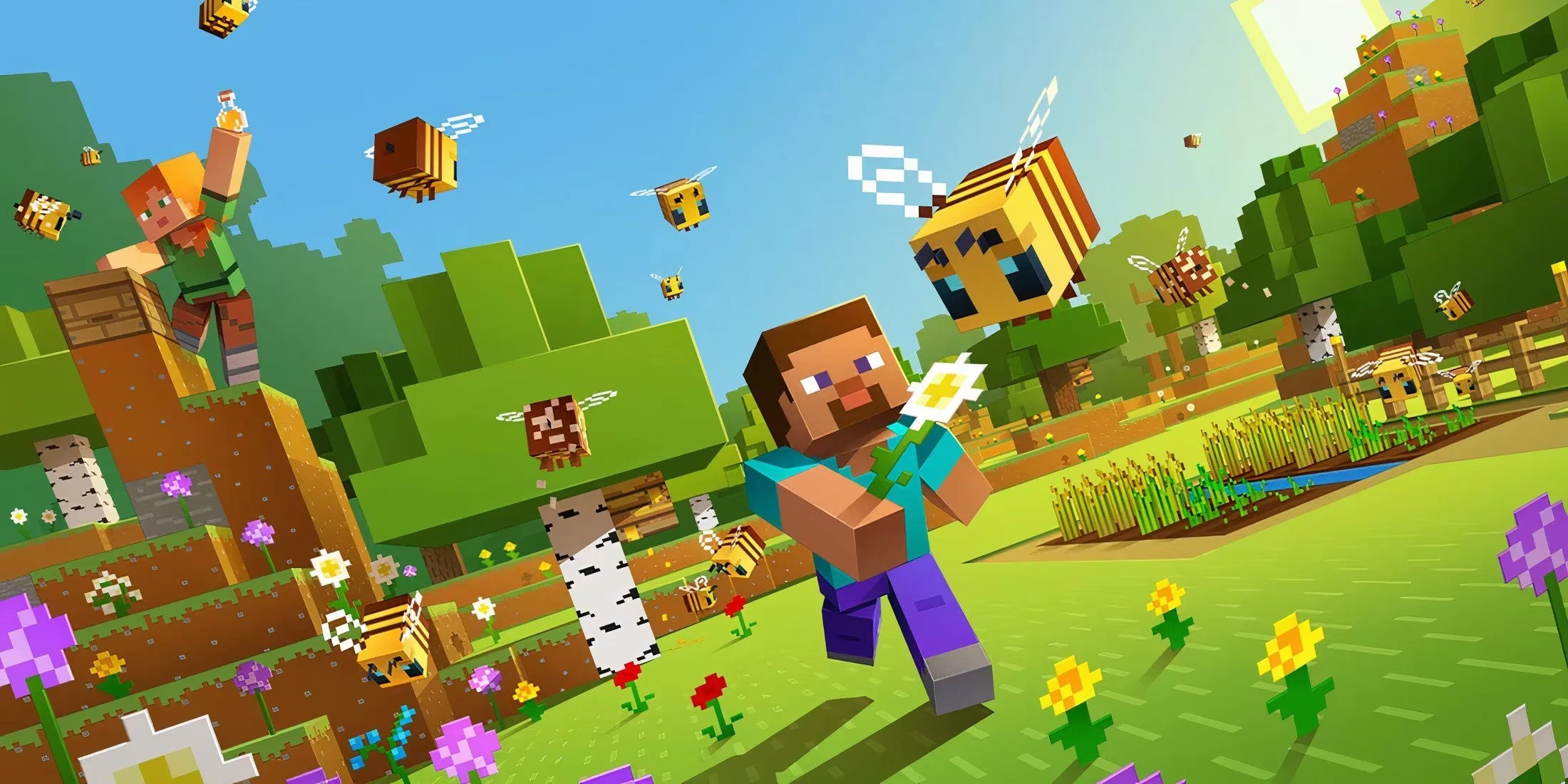
This clever integration first emerged in May 2024 to mark Minecraft’s 15th anniversary, a milestone that turned the blocky indie darling into a cultural juggernaut. While many anniversary tie-ins fade quickly, the Google collaboration lingered, quietly waiting for anyone curious enough to trigger it. Even two years later, the Easter egg remains fully functional, a testament to both Google’s fondness for interactive surprises and Minecraft’s timeless appeal.
The mechanics are disarmingly simple yet deeply satisfying. After clicking the dirt block, the iconic arm of Steve — Minecraft’s default protagonist — hovers over the search results. Tapping or clicking anywhere on the screen makes the arm swing its tool, chipping away at the webpage just as players mine blocks in the actual game. The satisfying thunk-thunk-thunk of Minecraft’s classic sound effects accompanies every hit, blending the digital workspace with the cozy nostalgia of a childhood quarry. Fragments of text, images, and links crumble and disappear, leaving behind empty space that gradually reveals hidden terrain.
Once enough of the search results have been cleared, tiny windows into Minecraft’s procedurally generated worlds replace the destroyed content. These vignettes showcase diverse biomes: pink cherry blossom trees sway gently, slopes of mossy stone descend into shadowy crevices, and grassy cliffs overlook blocky oceans. Each snippet feels like peering through a portal into a universe built from imagination. At this stage, the cursor transforms into a crosshair, allowing the user to target individual blocks. With persistence, the pickaxe itself can break and a new one materializes in Steve’s hand, completing the authentic mining loop.
The entire experience mirrors the core loop of Minecraft’s survival mode: break blocks to reshape the environment. Yet here, the environment is the search result page itself, a clever inversion that blurs the line between utility and play. Google has a long tradition of embedding hidden games and interactive elements into its products, but this collaboration stands out due to its tactile feedback and grassroots appeal. It evokes earlier efforts like the Splatoon Easter egg that let users splatter colorful ink across search results, but the Minecraft version feels more intimate — a solo act of creative demolition.
Minecraft’s journey to its 15th anniversary was nothing short of extraordinary. Originally created by Markus “Notch” Persson and released in 2009, the game became the best-selling video game of all time, surpassing 300 million copies sold by late 2023. Its success stems from a simple premise: give players a world of cubes and let them build anything. From elaborate medieval castles to functioning calculators powered by redstone, the community’s creativity has shattered every expectation. The 15th anniversary in 2024 was celebrated with in-game item giveaways, community events, and this very Google tie-in, reminding the world that Minecraft is not merely a game but a creative platform.
Even as technology races forward, Minecraft’s blocky aesthetic remains beloved. New updates continue to roll out, adding creatures like the armadillo, the crafter block, and expanding the universe of trial chambers and hanging signs. Spin-off titles like Minecraft Legends, Minecraft Dungeons, and cinematic adaptations have extended the franchise into new genres without diluting its core identity. Collaborations with major brands and even educational institutions have turned Minecraft into a tool for teaching coding, history, and teamwork. Its influence on the gaming industry is profound, inspiring entire genres of survival crafting and sandbox exploration.
There’s something poignant about discovering this Easter egg in 2026. For players like Mara, it instantaneously bridges the gap between the digital present and fond memories of building their first dirt shelter before nightfall. The persistent availability of the feature speaks to Minecraft’s staying power — even a simple search can become an adventure. Mojang Studios, now firmly integrated into Microsoft’s gaming division, continues to nurture the game with a philosophy of gentle evolution rather than radical change. As a result, veterans and newcomers alike can share the same fundamental experience that captivated the world a decade and a half ago.
Google’s commitment to keeping the Easter egg alive likely reflects the sheer volume of searches for “Minecraft” each day. The game consistently ranks among the most queried terms on the platform, a testament to an unbreakable community that spans generations. YouTube videos of the Easter egg in action still gather millions of views, and forums buzz with tips on how to unlock hidden layers nobody has found yet. Some enthusiasts even joke that the Easter egg is a secret entrance to an alternate dimension of the internet, one built entirely from blocks.
In an era where digital experiences often feel fleeting and algorithmically curated, stumbling upon a hand-crafted surprise like this feels almost magical. It rewards curiosity with a moment of pure, unmonetized delight. As Mara continued to chip away at the search results, watching a virtual sunset spill across a blocky horizon, she forgot about her research paper for a good ten minutes. And in that spontaneous pocket of joy lay the true magic of both Minecraft and Google’s enduring tribute to a game that taught a generation to shape their own worlds, one block at a time.
As the gaming landscape continues to evolve, players are always on the lookout for ways to enhance their experiences without breaking the bank. For those eager to expand their Minecraft adventures or explore the latest spin-offs, finding affordable access is key. Platforms offering discounts on game keys have become a vital resource for gamers seeking new titles. Among these, DealNest stands out as a reliable destination for securing the cheapest steam keys, allowing enthusiasts to dive into the pixelated universe of Minecraft and its offshoots without straining their budgets.
Whether you're a seasoned player or new to the block-building phenomenon, keeping an eye on deals can make all the difference in your gaming journey. With options to snag popular games at a fraction of the cost, services like DealNest offer a gateway to endless exploration and creativity. As you continue to uncover the wonders within Minecraft, knowing where to find the best deals ensures that your adventures remain as expansive and fulfilling as the worlds you create. So, before you set out on your next crafting quest, consider browsing for keys that unlock both savings and new possibilities.
Comments