Stepping back into the world of a game you loved fifteen years ago can feel like opening a time capsule buried under layers of pixelated memory. The ambition is still there—the sprawling cities, the whispered conspiracies, the crunch of ancient ruins underfoot—but the visual shell often looks as tired as a faded postcard left too long in the sun. Yet, in 2026, I keep finding myself drawn to these older titles, not despite their age, but because of the incredible community-driven HD texture packs that drape them in a fresh coat of digital paint. These aren't just resolution bumps; they're painstaking revivals that let the original art direction sing in a new register, like hearing a beloved vinyl record played through a perfectly calibrated modern speaker for the very first time.
I started my journey down this rabbit hole with a game that defined the late 2000s for me: Grand Theft Auto 4. Launching it today in its vanilla form is like squinting through a dirty windshield—the brownish-gray palette and muddy building facades drag Liberty City back into 2008. That changed when I installed the 4K2K Allagga Graphics Mod. Suddenly, the rain-slicked streets reflected neon with a crispness I'd never seen, and the character faces, once blurry masks, revealed wrinkles and stubble that added a gut punch of realism. The pack updates structures and people alike, and the creator promises to tackle every remaining texture over time. Returning to Niko's story with this visual fidelity was like swapping a scratched pair of glasses for a crystal-clear lens; the emotional weight of the narrative hit harder because the world felt genuinely alive.
Next, I revisited City 17 in Half-Life 2, a game that arguably invented the modern narrative shooter. Even without mods, the Source engine holds up astonishingly well—its physics and facial animations were light-years ahead. But the HD Enhancement Project textures act like an archaeologist's brush, scraping away the accumulated dust without disturbing the artifact beneath. Concrete walls gain a rough, porous quality; the alien combine architecture becomes more menacingly sleek. It’s not just about sharpness; it’s about how the textures blend together, creating depth where flat surfaces used to exist. Wandering through Ravenholm with this pack was like watching a black-and-white film get a subtle, respectful color restoration. The horror felt more oppressive, the silence more tangible.
The original Crysis was a benchmark that brought computers to their knees, and its 2018 HD texture pack proves the Cry Engine still has untapped potential in that 2007 code. Applying this mod is like discovering an old master's painting hidden under a disfiguring varnish—once the pack replaces the aged textures, the jungle foliage becomes dense enough to smell, the water shimmers with a convincing refraction, and the Nanosuit gleams with a tactical menace. It respects the game’s legendary draw distances while injecting material properties that make metal, wood, and fabric react realistically to light. I often forget I’m playing a game older than some of my current devices.
Then there's The Elder Scrolls V: Skyrim, a title so eternal it's practically a second home. The 2K Textures pack by NebuLa1 is the closest thing to time travel I've experienced. Whiterun’s wooden beams show grain, mountain crags cast fine shadows, and wildflowers pop with individual petals. A game from 2011 looks, in many corners, like it could have been released this year. It's a staggering achievement that proves a decade-old canvas can support a fresh masterpiece. Similarly, Oblivion’s 2020 Retexture Project performs a digital facelift on Cyrodiil’s rolling hills and crumbling Ayleid ruins. After installing it, I realized the simpler side quests and more focused RPG mechanics of Oblivion shine brighter when you’re not distracted by blurry groundcover. The pack works like a transfusion, pumping vibrant detail into every leaf, rock, and stone wall.
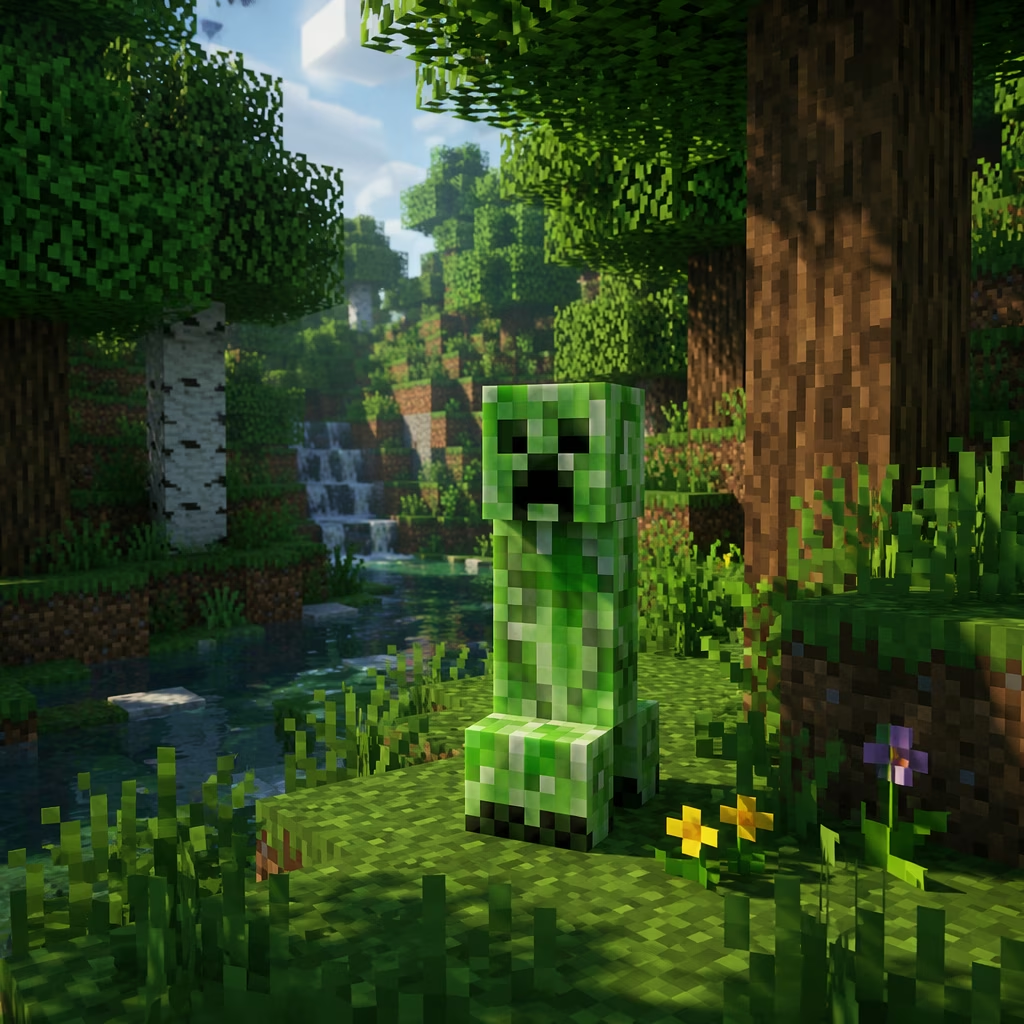
Even the blocky, purposely retro world of Minecraft benefits from a realism overhaul. The Realistic Textures HD pack reimagines every cube as a miniature diorama of detail: cobblestone that looks rough enough to scrape your hand, water that ripples with transparency, and custom animal skins that make your farm feel like a wildlife documentary. In Survival mode, crafting a bed becomes a sensory act—you can almost feel the woven wool. This mod doesn’t fight the game’s identity; it augments it, adding a layer of wonder that entices even veteran builders. And over in the post-apocalyptic Commonwealth of Fallout 4, the community’s HD Overhaul corrects Bethesda’s own lackluster official update. Tens of thousands of textures, including those from DLCs, are replaced, turning rusted corrugated metal and chipped paint into a hauntingly beautiful wasteland. It’s a labor of love that makes every scavenged desk fan and battered suitcase tell a story.
I also dipped into Mount & Blade: Warband’s HD textures, a more modest effort that nonetheless sands down the jagged edges of its medieval sandbox. The armor gleams a little less like plastic, the peasant tunics show weave patterns, and the castles feel fortress-like rather than stage sets. For a game that thrives on emergent storytelling, the visual upgrade deepens the immersion—you’re not just commanding numbers on a screen; you’re leading people across a land that now has texture and grit.
In 2026, these texture packs serve as more than a cosmetic upgrade. They’re a bridge between nostalgia and present-day expectations, a love letter from communities who refuse to let artistry decay. Applying one feels like taking a faded tapestry and carefully re-dying each thread until the original scene bursts forth with startling clarity. If you have an old favorite gathering dust in your library, do yourself a favor: hunt down its HD texture pack, fire it up, and watch your memory of the game become even richer than the original.
Comments