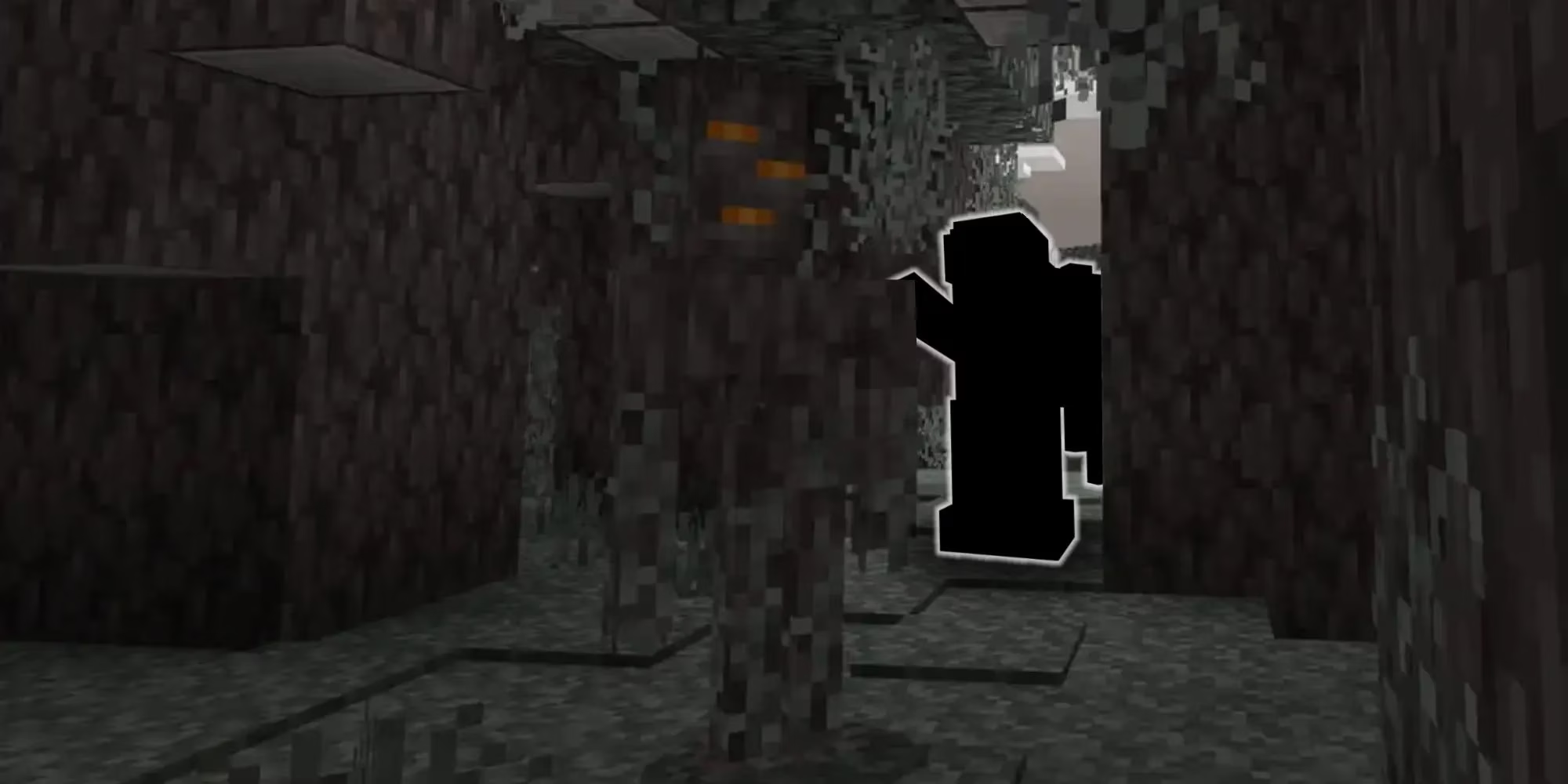
The recent introduction of the Creaking mob in Minecraft's Pale Garden biome has sent shivers down the spines of players exploring its eerie landscapes. This unsettling creature, which can only move when unobserved and cannot be directly harmed, has significantly amplified the game's fear factor. Yet, for many seasoned players and pop culture enthusiasts, this new addition felt strangely familiar. The uncanny similarity between the Creaking's core mechanics and those of the iconic Doctor Who monsters, the Weeping Angels, has sparked widespread discussion and drawn direct comparisons. This connection is more than just a coincidence; it represents a potential paradigm shift. Could the Creaking's inspiration from a popular fan-made mod signal that Mojang is now more open to adapting and integrating community-created concepts into the official, vanilla version of Minecraft?
The Unmistakable Parallel: Creaking vs. Weeping Angels
The similarities between Minecraft's Creaking and the Weeping Angels are too pronounced to ignore. Both entities operate on a fundamental rule of perception: they are immobilized when being looked at and can only advance when out of direct sight. This creates a uniquely tense gameplay and narrative dynamic where the player's gaze becomes their primary defense. The connection was humorously cemented by developer Gnembon during Minecraft Live 2024 with the advice, "don't blink"—a line famously associated with the Weeping Angels. But is this merely an homage, or evidence of direct inspiration?
When examining their mechanics side-by-side, the parallels are striking:
-
Movement Trigger: Both move exclusively when unobserved.
-
Invulnerability: Neither can be harmed through conventional, direct attacks.
-
Atmospheric Role: Both serve as central horror elements within their respective eerie settings (the Pale Garden and various Doctor Who episodes).
This design isn't entirely unique to these two creatures, of course. The trope of statuesque monsters that move when unseen is a staple of the horror genre, seen in entities like Lethal Company's Coil-Head or the infamous SCP-173. However, the specific implementation and cultural weight of the Weeping Angels make the Creaking's resemblance particularly notable.
From Mod to Mainstream: A Proven Pathway
The most compelling evidence for this potential new direction is historical. Long before the Creaking was an official mob, dedicated Minecraft modders had already brought the terror of the Weeping Angels and SCP-173 into the blocky world. These mods were popular within their niches, offering players a distinct kind of horror challenge. The introduction of the Creaking, with its nearly identical gimmick, raises an intriguing question: has the official game now co-opted the appeal of these fan creations?
This development has a dual effect. On one hand, it validates the creativity of the modding community, showing that their ideas have merit and appeal on a global scale. On the other hand, it risks diminishing the uniqueness of the original mods. Why would a player seek out a Weeping Angel mod when a functionally similar creature exists in the base game? This shift moves such concepts from being niche fan service to central, canonical gameplay elements.
A Blueprint for Future Mobs: What Could Be Next?
If Mojang is indeed considering a more open approach to integrating mod-inspired content, the possibilities are vast. The game's modding community is one of the most prolific and creative in gaming, having already designed, balanced, and implemented countless new mobs. The key for Mojang would be to adapt these concepts thoughtfully, adding its own signature "Minecraft" twist rather than implementing them directly.
What kind of mod-inspired mobs could fit this new model? The focus would likely be on additions that complement and enhance the existing Minecraft experience, rather than those that feel like a completely different game. Let's explore a few hypothetical examples based on popular mod archetypes:
| Mod Inspiration | Core Concept | Potential Official Adaptation |
|---|---|---|
| Cave Dweller Mods | Adds rare, elusive hostile mobs deep underground that stalk players. | A new "Stalker" mob for the Deep Dark, using sculk sensors to track players it can't see. |
| Creeper Overhaul Mods | Creates multiple variants of Creepers with different behaviors and explosions. | Official biome-specific Creeper variants (e.g., a Desert Creeper that creates a sand cloud). |
| Elemental / Magma Monster Mods | Introduces mobs with unique elemental interactions with the environment. | A "Basalt Golem" in the Nether that reforms from nearby basalt when "killed." |
Balancing Creativity and Canon: The Mojang Approach
It's crucial to understand that direct adoption of mods is improbable. Mojang's strength lies in its ability to distill a community idea into something that feels inherently part of Minecraft's world. The Creaking isn't a carbon copy of a Weeping Angel; it's a mob made of wood and vines that fits seamlessly into the haunting ecology of the Pale Garden. This process of adaptation and refinement is what would make any future integrations successful.
Would players welcome more mobs that originated as mod concepts? The answer likely depends on execution. The community has historically embraced additions that feel organic, like the Phantom (which addressed a gameplay mechanic—not sleeping—in a monstrous way) or the Warden (which introduced a new, perception-based threat). Mobs adapted from mods would need to pass the same test: do they feel like they belong in Minecraft?
The Future of Fear and Fun in Minecraft
As of 2026, the Creaking stands as a fascinating case study. It has successfully imported a beloved horror trope into Minecraft, enhanced a new biome, and arguably validated years of modder creativity. Its existence opens a door. Perhaps future updates will see Mojang more formally looking to the modding community for inspiration, not just for mobs, but for biome concepts, gameplay mechanics, or even new dimensions.
The introduction of the Creaking proves that the line between official content and fan-made passion projects can be a source of incredible innovation. By acknowledging and creatively reinterpreting the ideas born in the community, Mojang can ensure that Minecraft continues to evolve in surprising and delightful ways, keeping both the fear and the fun fresh for another generation of players. The next time a new, terrifying mob is announced, players might just find themselves wondering: did this start its life as a mod?
Comments