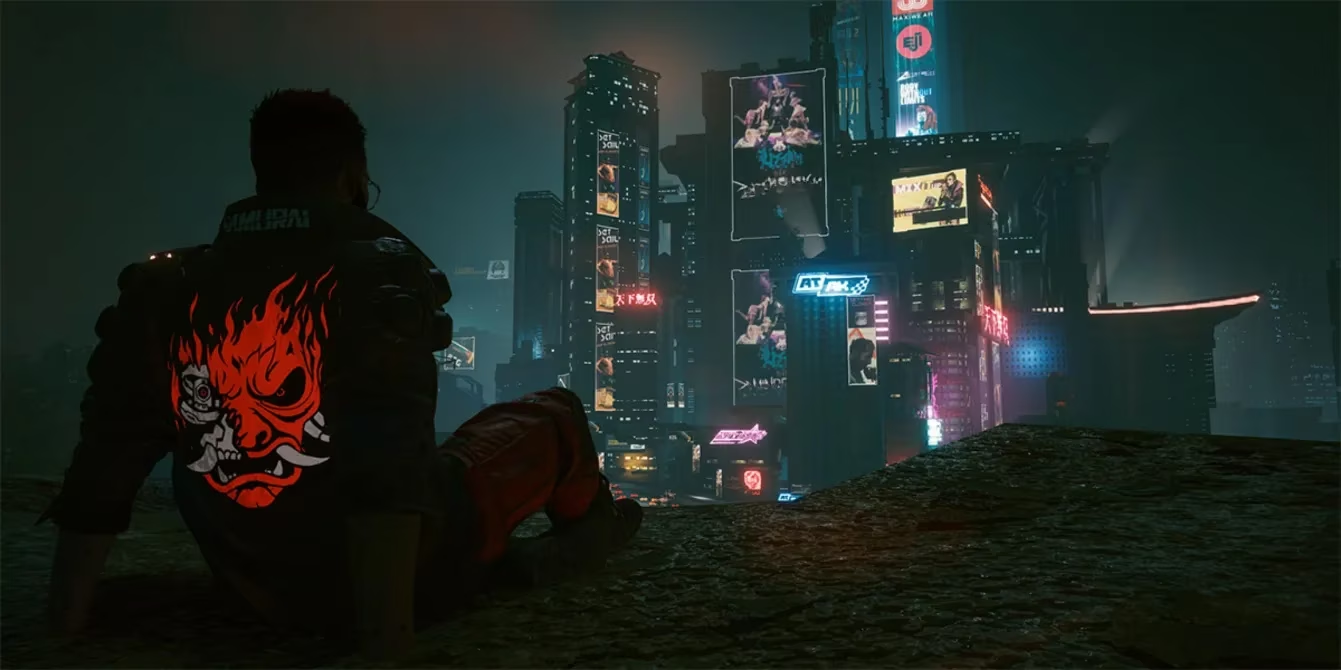
As I look out over the sprawling, neon-drenched skyline of my creation, I can't help but wonder: what is it about Minecraft that allows our wildest imaginations to become blocky, tangible reality? It's 2026 now, and the legacy of Mojang's sandbox phenomenon, which exploded in popularity after its 2011 release, feels more vibrant than ever. The community's creativity isn't just alive; it's evolved into something breathtaking. We've moved beyond simple castles and farms. Today, we're architects of entire worlds, and my proudest achievement is the cyberpunk metropolis I call Octavian.
From Inspiration to Blocky Foundation
The seed for Octavian was planted years ago. I was always fascinated by dystopian, futuristic aesthetics—the kind you see in classic cyberpunk media. I remember thinking, "Could the humble, square blocks of Minecraft ever capture the gritty, neon-soaked essence of a sprawling future city?" Turns out, they absolutely can. My journey wasn't about replicating something perfectly; it was about interpreting that feeling. I started with a single, glowing tower, and before I knew it, I was laying the foundations for what would become the largest city in my personal universe, Sky Pixel.
The Heart of Octavian: Detail and Atmosphere
Building Octavian wasn't a weekend project. How could it be? Every street, every flickering sign, every layered overpass needed to tell a story of a lived-in, albeit chaotic, future. I poured countless hours into the details:
-
Neon Networks: I used a palette of glowing blocks—sea lanterns, redstone lamps, and colored glass—to create the iconic neon glow. The goal was to make the colors so vivid they'd feel alive against the often stark, blocky terrain.
-
Verticality: A true cyberpunk city stretches upwards. I built towering megastructures, interconnected by precarious-looking walkways and holographic advertisements that don't actually work but sure look like they should!
-
The Gritty Underside: For every shiny skyscraper, I crafted shadowy alleyways and cramped marketplaces. A city isn't just its skyline; it's also its hidden corners.
The reaction when I first shared Octavian on Reddit was overwhelming. Thousands of fellow players chimed in, amazed at the depth and color. One of the highest honors was having my design featured on Planet Minecraft, a hub that celebrates player creativity. It was a validation that this blocky neon dream resonated with others.
A Legacy of Creativity and Looking Forward
My build is just one leaf on a massive, ever-growing tree. The Minecraft community has consistently pushed boundaries. Remember when someone rebuilt the entire Kalimari Desert from Mario Kart 64? Or coded a working version of Angry Birds within the game? This spirit of innovation is the engine of Minecraft. It's why, over a decade later, we're still here, building.
And the world keeps expanding beyond our servers. The much-anticipated Minecraft Movie, which gave us a thrilling first look back in 2024, finally released in 2025. Seeing stars like Jack Black bring the world of Steve to life was a surreal moment for all of us who grew up with these blocks. It cemented Minecraft's place not just as a game, but as a global cultural touchstone.
So, here I am in 2026, still adding to Octavian. Maybe I'll build a new district, or finally figure out a working monorail system. The point is, the canvas is infinite. For players who love sci-fi but haven't navigated the dense streets of Night City from Cyberpunk 2077, builds like mine offer a unique, hands-on way to experience that dystopian wonder. You don't just visit these cities; you pour your imagination into every block to create them. And really, what could be more punk than that? Building your own future, one block at a time.
Comments