In the quiet, blocky world of Minecraft, a silent revolution hums in the background. It is the work of the technical artisan, the player who sees not just a landscape to be conquered, but a system to be perfected. Their canvas is the infinite grid, their brushstrokes are pistons and observers, and their masterpiece is a world that breathes and produces on its own. This is the realm of AFK farming, where complexity yields to simplicity, and abundance springs from elegant, patient design. The year is 2026, and the art of automation has never been more refined or accessible.
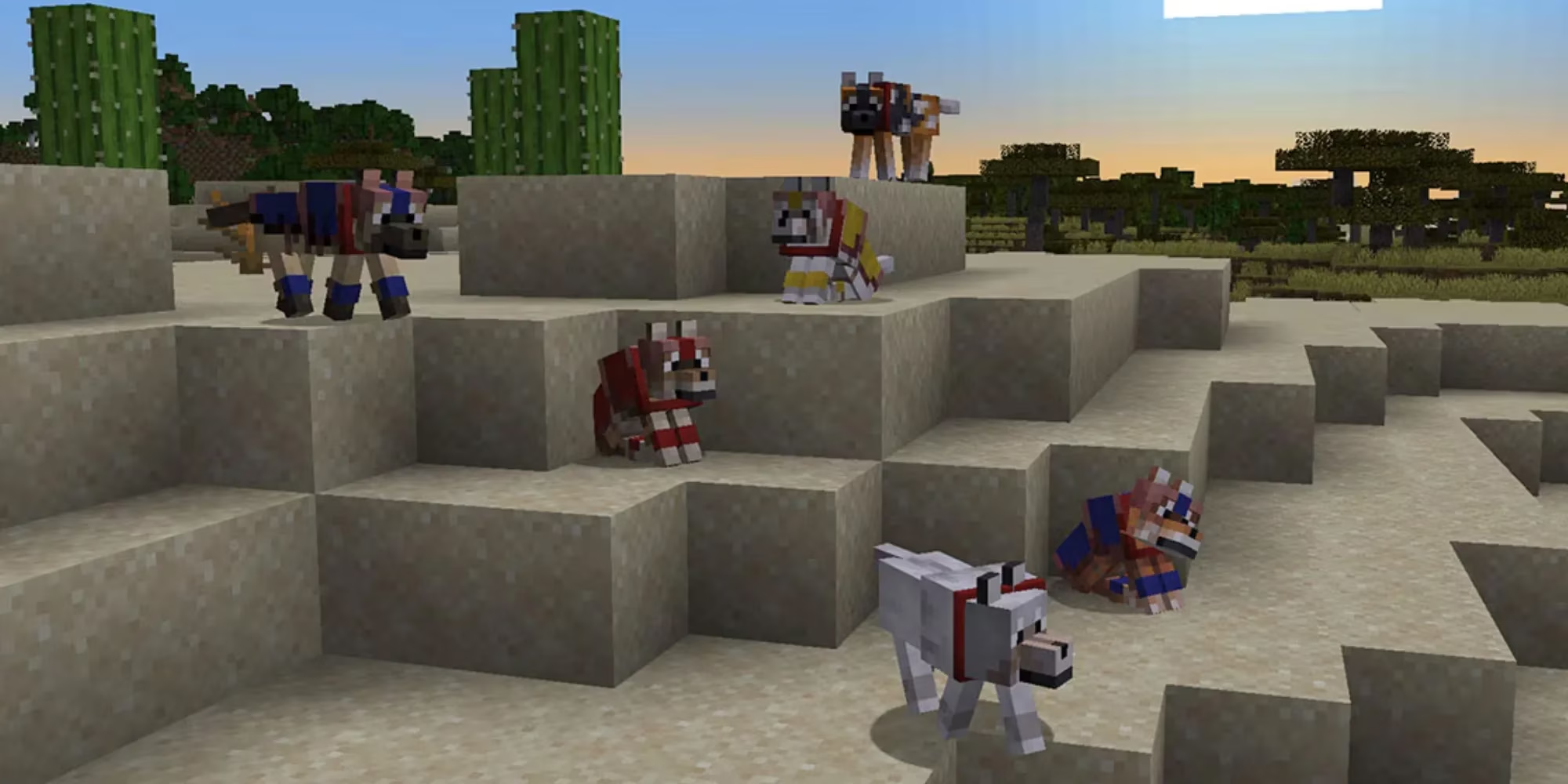
Let us begin with the humble beginnings of wealth. Melon and Pumpkin farms stand as the poet's first stanza—simple, rhythmic, and profoundly rewarding. They are not grown for sustenance, but for commerce, transforming emerald-green vines into the glittering currency of the Villager economy. With a few observers watching for the fruit of their labor and pistons ready to harvest, these farms expand with the ease of a spreading vine, a low-risk testament to the principle that great fortunes can have the simplest roots.
Wool, the cloud-captured and sheared, serves a dual purpose. It is the soft aesthetic for banners and carpets, yes, but in the hands of a Nether-bound miner, it becomes something more potent: an explosive tool for excavation. A simple observer and dispenser can orchestrate this fluffy harvest, proving that sometimes the most straightforward automation enables the most daring adventures.
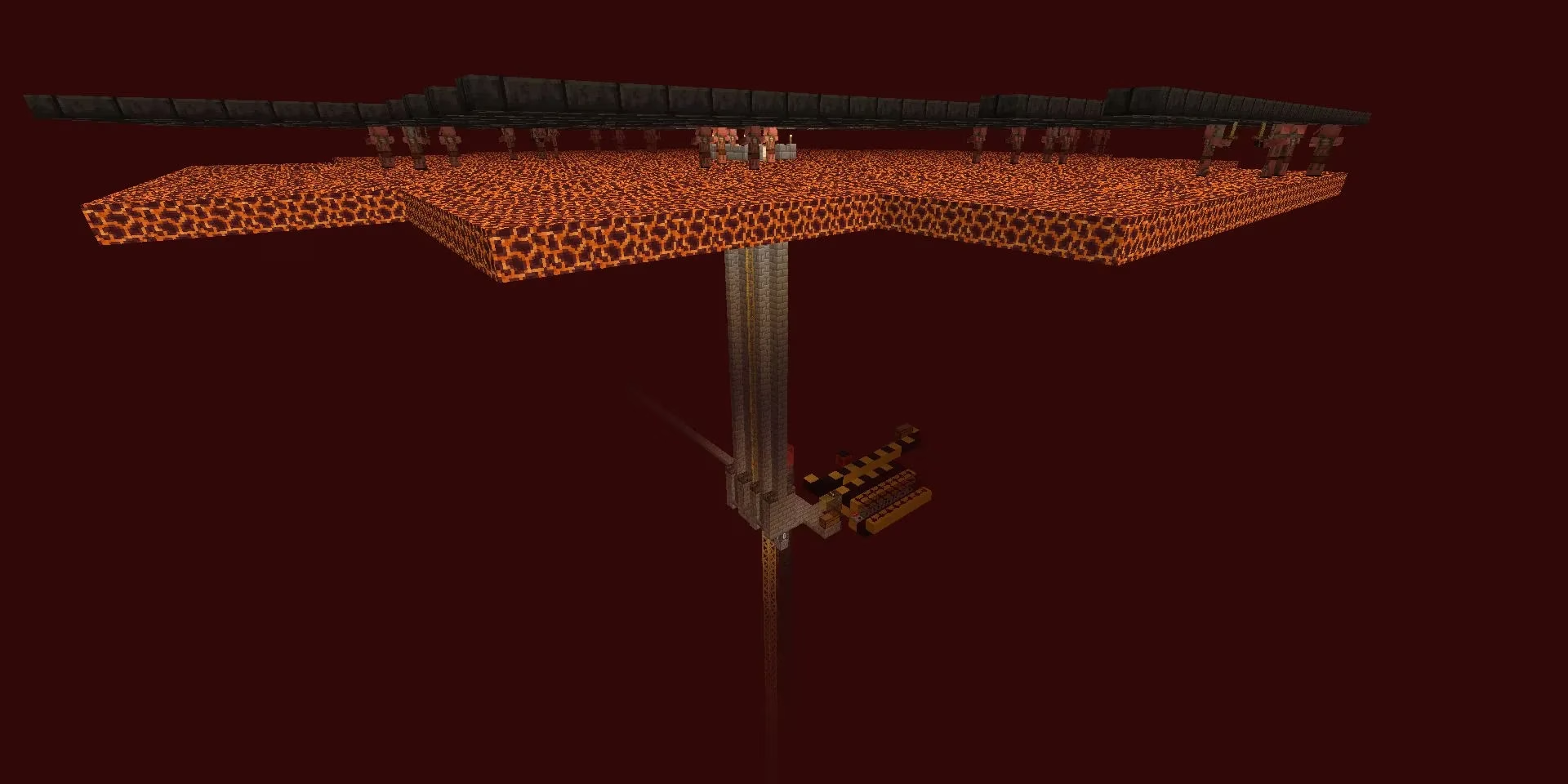
Then there is Gold, the alchemist's dream. On its own, a golden farm is a fountain of experience, a shower of orbs for the taking. Yet its true magic lies in transmutation. Feed this raw, mined wealth to the Piglins of the Nether, and watch it blossom into a cornucopia: leather for armor, quartz for light, obsidian for portals, and pearls for travel. It is a single, complex mechanism that unpacks into a dozen different resources, a symphony conducted from a single, glowing note.
Coal presents a different kind of challenge—a saga of preparation for an eternity of reward. To tame the Wither Skeletons within a Nether Fortress is a heroic undertaking, a campaign of mob-proofing and strategic canine deployment. But victory here grants not just the black diamonds of fuel, but also the grim trophies of skulls and a relentless flow of experience. It is the furnace that never asks for more, the engine that powers a world.
The gentle rustle of Bamboo and Sugarcane speaks of growth and utility. Their designs are often interchangeable, two melodies played on the same instrument. Sugarcane becomes the paper for vast libraries and lucrative trades, the foundation of knowledge and economy. Bamboo, meanwhile, is the quick-growing forest, ready to be transformed into scaffolding for builders or planks for crafters. Hook this verdant factory to an autocrafter, and you have created the very first self-replenishing woodland.
Mob Grinders are the dark, efficient hearts found in the world's dungeons. They are gifts from the game itself, especially the clattering skeleton spawners. To build one is to accept an endless offering: a cascade of bones for taming and bonemeal, arrows for archery, and experience that pools at your feet like water. Each type of spawner sings its own loot-laden song, a perpetual harvest from the shadows.
The Witch's hut is a cauldron of complexity, a project that demands dedication. In return, it brews a smorgasbord of the arcane: the red dust of Redstone, the glowing powder of Glowstone, the sulfurous Gunpowder, and more. It consolidates needs, making separate farms for these essentials a memory. It is a fortress of automation, daunting to raise but unparalleled in its bounty.
From the crimson forests of the Nether come the Hoglins, a source of sizzling sustenance and supple leather. Once access to the Nether roof is secured, this farm becomes a fully AFK provider of cooked porkchops—a perfect companion to other Nether ventures like gold or blaze rod collection. It is the hearty, automatic feast after a long day of dimensional exploration.
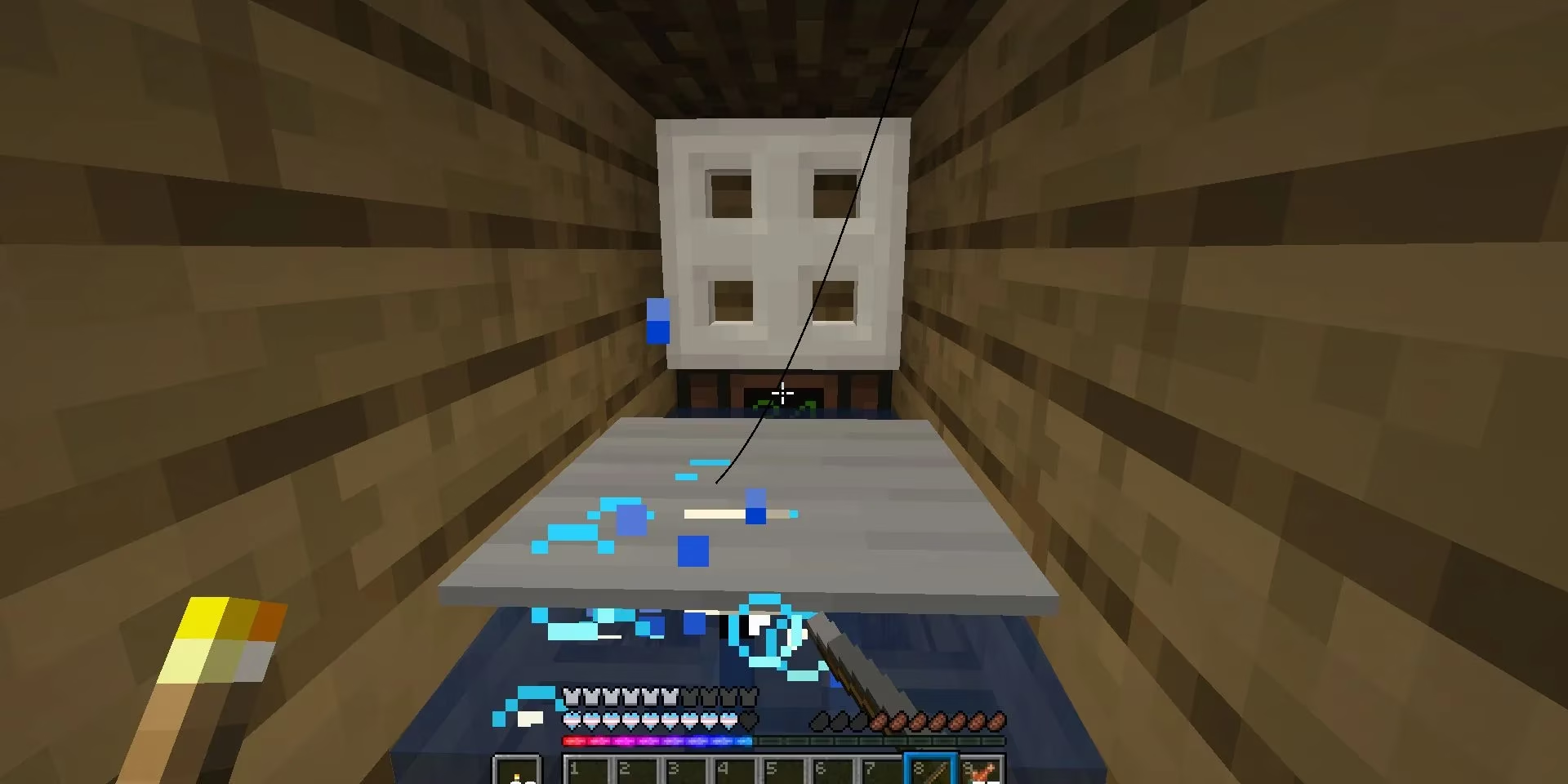
Fishing, though changed by updates, remains a timeless pastime mechanized. A simple design with a noteblock and pressure plate still yields an endless school of fish and "treasure" loot. For those who delve deeper, employing the resonant sensitivity of a Sculk Sensor unlocks true treasure: enchanted books whispering with power, bows strung with magic, and rods that never break. It is patience, automated; a quiet pond that holds infinite possibility.
And finally, we come to the pinnacle of modern efficiency: the Iron Golem farm. The evolution here is poetic. Once a sprawling village simulation requiring twenty doors, it has been refined into a compact, almost minimalist sculpture. A small, spawn-proofed area is all it needs to begin its work. The iron ingots flow like a metallic river, more than any single player could ever need, accompanied by the gentle, ironic gift of poppies. This farm empowers everything: it forges tools, facilitates trades, and makes recovery from misfortune trivial. In a multiplayer world, the player with a humming iron farm is not just a survivor; they are the bedrock upon which communities are built, the unsung MVP ensuring progress never halts.
This, then, is the quiet poetry of a technical Minecraft world in 2026. It is not about the frantic gathering, but the serene, ticking clockwork of creation. Each farm, from the simplest melon patch to the most intricate iron foundry, is a verse in an epic of self-sufficiency. They stand as monuments to the idea that with cleverness and care, the world itself can be persuaded to provide, leaving the artist free to dream, build, and explore under a sky filled with automatic stars.
Comments