Survival games have always left a mark on the gaming industry. They drop players into hostile environments, strip away comfort, and ask one blunt question: can you last another night? During the Xbox 360 era, that question echoed through post-apocalyptic cities, zombie-infested malls, blocky wildernesses, and irradiated tunnels. In 2026, many of those experiences still feel like time capsules — rough, tense, and strangely beautiful. The following five titles, from Ubisoft's forgotten experiment to Mojang's endless sandbox, helped shape what survival means on console.
| Game | World | Survival Pressure |
|---|---|---|
| I Am Alive | Ruined post-apocalyptic city | Stamina, climbing, scarce resources |
| Dead Rising | Zombie-infested mall and town | Hordes, time limits, survivor escorts |
| Minecraft | Procedural blocky biomes | Mobs, hunger, crafting, nightfall |
| Fallout: New Vegas | Mojave wasteland | Radiation, hunger, thirst, Hardcore mode |
| Metro: Last Light | Post-nuclear Moscow | Gas masks, mutants, hostile factions |
I Am Alive: A City That Refuses to Let Go
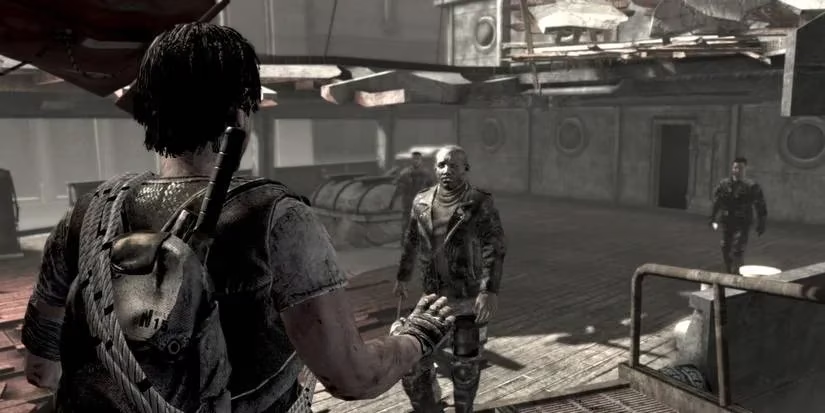
Ubisoft's I Am Alive came and went without leaving too much of an impression, but it stands out for being one of the few survival games on the Xbox 360. A weary traveler moves through a post-apocalyptic city filled with falling-apart skyscrapers. The player climbs steep buildings while managing stamina, a task that is easier said than done. Every handhold feels like a gamble, and every sprint can become a death sentence. Survivors encountered along the way can be aggressive or friendly, so trust is never free. Collecting resources takes up a fair amount of time too, turning quiet moments into tense scavenging runs.
I Am Alive is far from perfect, and it can be a bit of a slog despite not being particularly long. That said, it has a cool setting and a few interesting gameplay ideas that can lead to some intense scenarios. Not a must-play title by any means, but this is one game that survival fans might appreciate — especially those who wonder what the genre looked like before every release needed a crafting menu the size of a novel.
Dead Rising: Zombies, Clocks, and Improvised Chaos
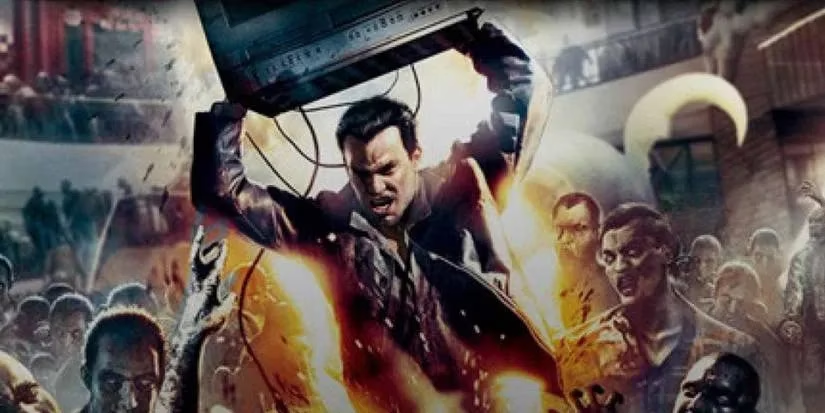
Dead Rising is known as one of the most popular zombie survival games. With each new installment, the gameplay mechanics, customization, and world setting improve, making the games more prominent. The Xbox 360 original, however, remains a landmark. It fills the screen with massive hordes of zombies that create a chaotic atmosphere. Dealing with these zombies is key to the player's survival. A survivor must also escort and rescue other survivors using various makeshift weapons, from benches and shopping carts to anything else that can be swung, thrown, or duct-taped into service.
Dead Rising having time-limited sections in some objectives adds a sense of urgency to every action that the player takes. The clock is not just a number; it is a hungry beast that eats opportunities. Miss a window, and a survivor may die. Waste too much time, and the story pushes forward without mercy. That pressure turns ordinary trips through a mall into desperate sprints, and it gives the game a rhythm that later entries tried to recapture. In 2026, the idea of a survival game with a strict schedule still feels bold, and Dead Rising wears that boldness like a bloodstained jacket.
Minecraft: The Sandbox That Became a Survival Institution
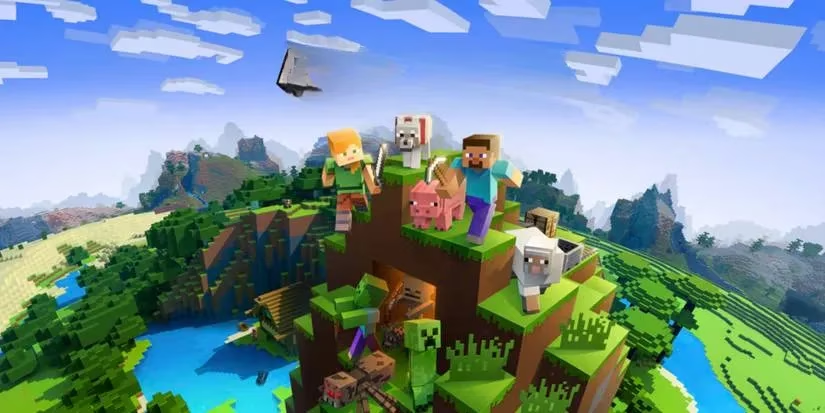
Survival in Minecraft revolves around the player's capability to acquire resources from the environment in order to craft tools, armor, or other useful items. Minecraft has a dynamic day-night cycle where enemy mobs start to spawn around the biomes and try to attack the player. The player must deal with the enemies while satisfying their hunger needs as well as keeping their health in check. The first night is a rite of passage: punch trees, build a shelter, craft a sword, and hope the zombies do not hear the door open.
As the game allows multiplayer mode, players can band together and create strongholds to fend off the enemies and harvest materials and resources at their ease. That cooperative layer turned Minecraft into something more than a survival game; it became a social platform, a creative tool, and a generator of shared stories. A group of friends might spend hours mining, farming, and building walls, only to lose it all to a creeper during a careless celebration. By 2026, Minecraft is still receiving updates and still attracting new players, but the core survival loop remains the same: gather, craft, survive, repeat.
Fallout: New Vegas: The Wasteland Wants You Dehydrated
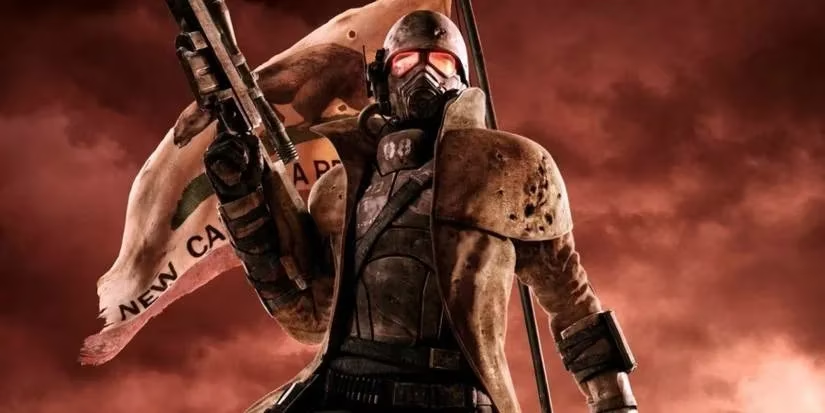
Set in a post-apocalyptic wasteland, Fallout: New Vegas tests its players as they set out to explore the deserted regions in the game. Navigating through harsh and hostile environments in a survival game is a given; however, Fallout adds the player's health condition to the table as well. Dealing with constant radiation in some areas and scarcity of food and water can lead to malnourishment and dehydration, making surviving more challenging. The Mojave is not just a battlefield; it is a menu of slow, creeping problems.
Scavenging for resources, cooking, and hunting are important aspects of the game. Playing Fallout: New Vegas in Hardcore mode further enhances the survival experience. The constant need for sleeping and eating also arises in order to avoid the negative effects. Ammunition has weight, stimpaks heal over time, and a bottle of purified water becomes a treasure. The result is a version of the wasteland where every decision matters, from which route to take to whether a pile of irradiated food is worth the risk. For many players, Hardcore mode turned a familiar RPG into a genuine survival ordeal.
Metro: Last Light: Gas Masks and Mutated Shadows
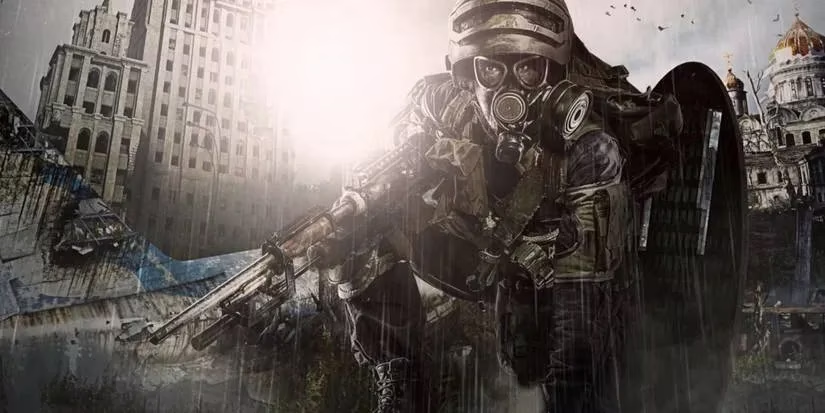
In Metro: Last Light, players get to explore a dark atmospheric setting due to the aftermath of a global nuclear war. The radiation has affected the environment as well as the creatures, mutating them into grotesque monsters. The creatures are not the only thing to worry about, as there are also hostile factions that pose a constant threat. Every tunnel can hide a mutant, a trap, or a patrol that will shoot first and ask questions never.
Many areas in the world of Metro: Last Light are full of radiation, making the use of gas masks crucial in order to survive. Filters run out, masks crack, and the sound of breathing becomes a countdown. The game dives into stealth gameplay, where the player tries to take out hostiles without alerting other enemies in the areas. Light becomes both a tool and a danger: it helps the player see, but it also gives away their position. That balance between visibility and safety gives Metro: Last Light a suffocating tension that few survival games can match.
Why These Xbox 360 Survival Games Still Matter in 2026
The Xbox 360 era was not always polished. It was an era of rough edges, odd camera angles, and mechanics that sometimes fought the player. Yet that roughness often worked in favor of survival games. Limited resources felt truly limited. Hostile environments felt truly hostile. A single mistake could undo an hour of careful preparation. The five games above each approached survival from a different angle: I Am Alive focused on stamina and scarcity, Dead Rising on time and crowds, Minecraft on creativity and nightfall, Fallout: New Vegas on bodily needs and radiation, and Metro: Last Light on atmosphere and stealth.
In 2026, survival games are bigger, prettier, and more complex. They feature sprawling maps, deep crafting systems, and online communities that never sleep. But the classics from the Xbox 360 era remain important because they understood a simple truth: survival is not about winning. It is about lasting long enough to see the next sunrise, the next save point, or the next impossible choice. For players who missed these titles the first time, they are still worth seeking out — not as museum pieces, but as reminders of how tense, frustrating, and unforgettable the genre can be.
Comments